Angled implants
Tilting the back implants can make use of the bone that remains in front of the sinuses or nerves and, for some people, avoid grafting.
After teeth are lost, or after years of gum disease or wearing a denture, the jawbone can shrink. Being told you ‘don’t have enough bone’ doesn’t always mean implants are impossible, but it does mean careful assessment and planning.
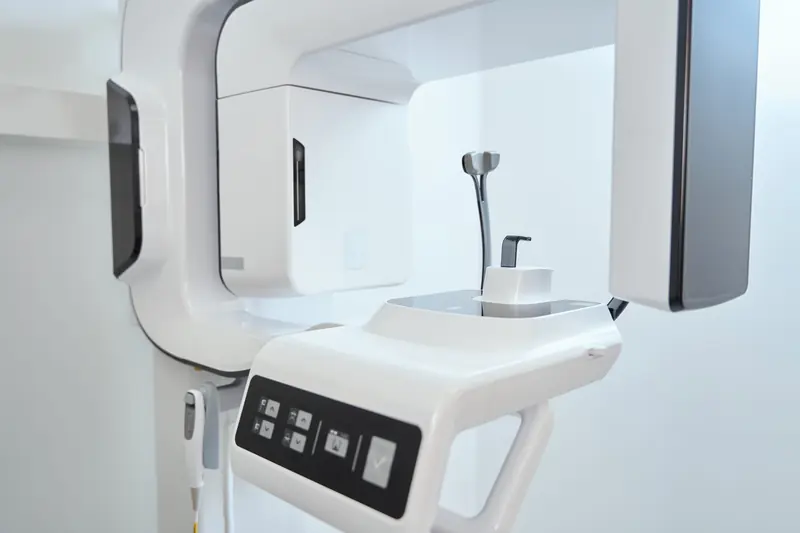
A 3D (CBCT) scan shows the height, width and density of your jawbone and the position of the sinuses and nerves. Your clinician uses it to work out whether standard implants can be placed and, if not, which alternatives may be worth discussing.
Tilting the back implants can make use of the bone that remains in front of the sinuses or nerves and, for some people, avoid grafting.
Bone can sometimes be rebuilt using graft material, either at the same time as implant placement or as a separate stage beforehand. Grafting adds healing time and cost, and is quoted separately.
For people with severe bone loss in the upper jaw, longer implants can be anchored in the cheekbone (zygoma). Systematic reviews have reported high survival — around 95% over 12 years — with most failures occurring early. The most common complication reported is sinusitis, which can appear years later. This is technically demanding surgery R8.
Implants can sometimes be anchored in dense bone at the very back of the upper jaw. A 2022 systematic review of modern implants reported survival of about 95% over six years, but long-term evidence is limited R11.
Which of these, if any, is right for you — and where it would be performed — is decided individually after assessment. Some complex procedures may involve referral or a different treating clinician.
We’re happy to review your situation and existing scans and explain what is and isn’t realistic.